 Attack on Titan 3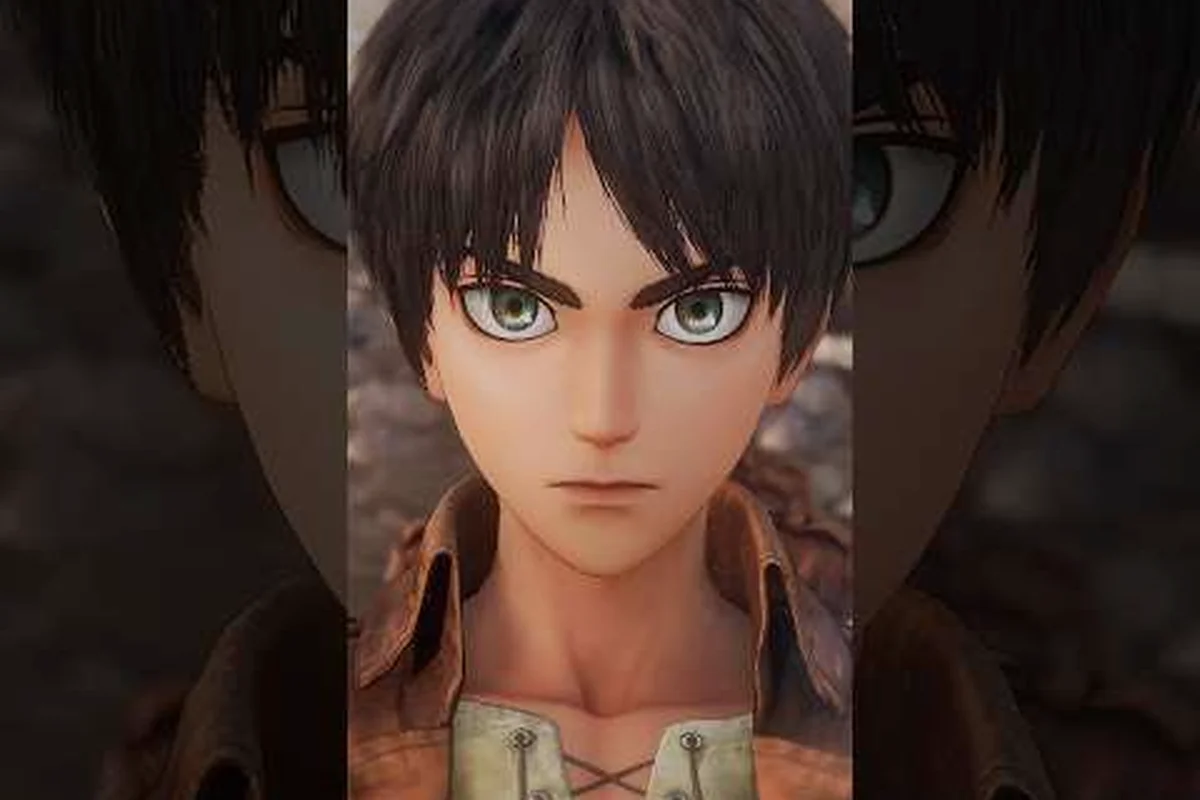
Building a reliable roster is the single biggest factor separating veteran Survey Corps players from rookies who lose their first roster within a few Exterior Scouting Missions. Attack on Titan 3 squad member recruitment operates on a layered system where each new teammate comes with unique Combat Arts, personality traits, and morale thresholds that directly influence whether your squad survives the Nine Titan encounters or collapses mid-mission.
Understanding Squad Member Recruitment in Attack on Titan 3
The recruitment system in Attack on Titan 3, developed by Omega Force and published by KOEI TECMO for release on December 9, 2026 across PS5, Xbox Series X|S, Switch 2, and PC, draws characters from the full manga saga. Unlike the action-musou formula of previous entries, this installment layers recruitment behind mission progression, story flags, and a hidden affinity score that tracks how your captain interacts with each candidate during downtime.
Recruitment Pools and Where to Find Candidates
There are three primary recruitment pools in Attack on Titan 3. Each pool unlocks at different points in the campaign and offers distinct stat ceilings. Candidates do not appear in your barracks immediately; they are gated by story progression, side-event triggers, and the post-mission debrief rank you achieve after returning through the walls.
| Recruitment Pool | Unlock Trigger | Average Stat Ceiling | Specialty Role |
|---|---|---|---|
| Trainee Corps | Prologue completion | 40-55 | Cannon fodder / morale anchor |
| Survey Corps Veterans | Chapter 4 cleared | 65-78 | ODM specialists / blade masters |
| Specialist Divisions | Chapter 9 + flag conditions | 75-92 | Anti-Titan tactics / command aura |
The Trainee pool includes cannon-fodder recruits with limited growth potential, while the Survey Corps pool unlocks familiar veterans from across the saga. The Specialist Divisions pool contains characters tied to specific story flags, such as completing optional debriefs or saving named NPCs during Exterior Scouting Missions. According to community data compiled on the official Attack on Titan 3 Steam Store page, candidates in this third pool can shift the entire difficulty curve of late-game Nine Titan encounters because their base stats start near the level cap rather than below it.
The Hidden Affinity Mechanic
Every recruit you bring into the squad carries an invisible Affinity Score that ranges from 0 to 100. This score is influenced by the dialogue choices you make during downtime events at camp, the missions you prioritize, and even the order in which you dispatch squad members during cooperative segments. The official gameplay reveal trailer hints at this layer when showing the debrief UI, but the exact thresholds are not officially documented as of August 2026.
Affinity governs three concrete outcomes: whether a candidate accepts your invitation outright, whether they unlock their Buddy Art synergy chain upon joining, and whether they will defect if your squad morale drops below 30% during a mission. Reported by players on community Discord threads, an Affinity Score above 70 generally guarantees recruitment, while scores below 40 may result in a soft rejection where the candidate instead joins as a temporary ally rather than a permanent squad member.
How to Protect Squad Members During Combat
Permanent death is one of the most punishing mechanics in Attack on Titan 3. Once a named squad member is killed during an Exterior Scouting Mission or a Nine Titan boss battle, they are gone for the remainder of the playthrough unless you reload an earlier save. The mechanic, confirmed in the SimulationDaily combat breakdown, means that learning how to protect squad members is not optional — it is the difference between keeping your roster intact and rebuilding from scratch every chapter.
Survival Triggers and Morale Thresholds
Each squad member has a Personal Survival Trigger, which is a hidden HP and morale threshold that triggers their desperate last stand if the surrounding conditions deteriorate. The trigger activates when a squad member's HP drops below 25% while squad morale sits below 50%. At that point, the game offers a brief cinematic window during which you can intervene with a Boost Move to pull the wounded teammate out of danger.
| Threat Level | Squad HP Average | Recommended Response | Risk of Permanent Death |
|---|---|---|---|
| Low | 75-100% | Standard ODM rotation | <5% |
| Moderate | 50-74% | Pull back, regroup at supply base | 15-25% |
| High | 25-49% | Activate Buddy Art chain, retreat | 45-60% |
| Critical | <25% | Boost Move rescue, abort mission | 70-90% |
The numbers above are based on community testing from early access players and may vary slightly with future patches. When squad morale falls below 30%, recruitment-level characters in the Trainee pool are statistically far more likely to die than Specialist Division veterans, because their HP pools are smaller and their panic AI triggers earlier. Pairing trainees with a high-Morale Aura captain is one of the most reliable ways to protect squad members during the early chapters.
Equipment Layer for Squad Protection
Beyond morale management, your squad member survival depends heavily on ODM Gear Quality and Blade Sharpness. Blades degrade during combat, and a dull blade at the wrong moment often means a squad member gets grabbed instead of escaping. According to community reports, you should always carry at least two spare blade sets per squad member and resupply at outposts between Titan encounters. Fuel management is equally critical: a squad member who runs dry mid-air near a Titan is almost guaranteed to be caught.
For a deeper look at what happens when protection fails and you lose a permanent squad member, the squad member death permanent guide walks through the recovery paths and how to plan around the worst-case scenario. Even with perfect play, environmental surprise attacks — a mechanic the developer highlighted in press materials — can catch a fully geared squad off-guard and wipe half your roster in a single encounter.
Squad Composition Strategy for Different Mission Types
A flat squad that works for story missions will collapse during Exterior Scouting Missions, and vice versa. Attack on Titan 3 squad composition strategy is about matching roles to mission pacing, terrain, and the specific Titan variant you expect to encounter. The squad building guide provides a broader overview of role synergies, but the breakdown below focuses on matchup-specific composition tuning.
Standard Story Mission Composition
Story missions follow predictable pacing and rarely spawn more than two Titans simultaneously. The recommended composition for these encounters prioritizes raw damage output and one dedicated tank role to absorb aggro while your captain executes the kill chain.
| Role | Member Count | Primary Function | Best Skill Category |
|---|---|---|---|
| Captain | 1 | Command aura + kill execution | Boost Move + Buddy Art |
| DPS Window | 2 | High burst damage on weak points | Combat Arts |
| Tank/Flank | 1 | Aggro redirect, rescue support | Buddy Art + Boost Move |
| Support | 1 | Fuel/blade resupply, morale boost | Utility Combat Arts |
The captain slot should always be your strongest character, because their morale aura affects the entire squad's panic threshold. Two DPS windows let you rotate targets quickly when Titans spawn in pairs, while the tank provides an emergency rescue option when squad members get grabbed. The support slot is flexible — early on it can be a trainee with high morale stats, but later chapters should swap in a Specialist Division recruit for raw survivability.
Exterior Scouting Mission Composition
Exterior Scouting Missions are where the advance-or-retreat system truly shines, and they require a different composition philosophy. Because these missions extend beyond the walls into open territory, squad attrition is the central pressure point. Players reported in community testing that running a squad with three captains and two tanks significantly improves survival rates on long expeditions, even if it sacrifices some burst damage.
The composition table below assumes a 5-squad roster for a standard Scouting Mission:
| Slot | Role | Recommended Trait | Why It Matters |
|---|---|---|---|
| 1 | Lead Captain | High morale aura | Sets retreat threshold |
| 2 | Sub-Captain | Boost Move specialist | Mid-air rescue range |
| 3 | Scout | High mobility ODM | Early threat detection |
| 4 | Combat Blade | Anti-Personnel | Handles small Titan spawns |
| 5 | Rear Guard | Tank + supply carrier | Protects retreat route |
Because these missions involve supply base building and outpost resupply decisions, the rear guard slot should ideally be a character with high carry weight and steady morale. Players who ignore this slot and run five damage dealers consistently lose the rear of their squad to surprise spawns, which then cascades into a retreat failure because the squad has no safe fallback line.
Squad Upgrade Path and Progression
Each recruited squad member follows a multi-stage upgrade path that determines their final combat viability. Attack on Titan 3 squad upgrade path progression is not linear; some characters branch into specialized roles at level 15, while others unlock passive auras at specific milestone levels. Understanding the path is essential for protecting squad members long-term, because an under-leveled squad member will die faster than their stats can keep up.
Leveling Curve and Milestone Bonuses
Squad members earn XP through combat participation, mission completion, and successful rescue actions. The XP curve is steep after level 10, so you cannot simply grind random encounters and expect your roster to keep pace with the difficulty ramp. Instead, focus XP on a core 4-member squad and use your fifth slot as a rotating training position.
| Level Range | XP Required (per level) | Milestone Bonus | Strategic Value |
|---|---|---|---|
| 1-5 | 500-800 | Unlock first Combat Art | Early game viability |
| 6-10 | 1,200-2,000 | Unlock Buddy Art slot | Mid-game foundation |
| 11-15 | 2,500-4,000 | Branch specialization | Late-game viability |
| 16-20 | 5,000-7,500 | Passive aura unlock | Endgame scaling |
The branch specialization at level 15 is the most important milestone, because it locks your character into one of three roles: Aggressive DPS, Defensive Support, or Hybrid Captain. Hybrid Captain is the strongest single branch for protecting squad members, but it requires the most investment to reach. Aggressive DPS is the easiest branch to unlock and the most forgiving for story content, but it leaves your squad vulnerable during long Scouting Missions where attrition matters more than burst.
Equipment Upgrade Interlinks
Squad upgrade is not limited to levels; Blade Parts, ODM Gas Canisters, and Uniform Reinforcement all stack with character level to determine effective combat power. According to the GamesPress official press release, the ODM combat has been refined with new techniques that reward players who invest in upgrade paths beyond raw levels.
The interaction between character level and gear tier creates a tier-list hierarchy that you should weigh when deciding who to prioritize. The best characters ranked guide covers the top performers across all categories, but for the purposes of squad upgrade path planning, the practical takeaway is to fully upgrade three core members before spreading investment thin across the roster. A single maxed-out captain with level 20 and tier-3 gear will protect squad members far better than five characters stuck at level 10 with starter equipment.
Best Characters for Squad Recruitment
Choosing who to bring into your roster is the most consequential decision in Attack on Titan 3. The best characters for squad recruitment are not always the ones with the highest stat ceilings; they are the ones whose passive auras, Combat Art chains, and morale thresholds match the missions you plan to run. Below is a breakdown of the top recruitment priorities based on community data from early access players and official press materials.
Top-Tier Recruits and Their Roles
The tier list below categorizes each candidate by their recruitment priority, role strength, and the chapter at which they become reliably obtainable. Stats are listed as approximate base values at level 1 and scale upward through the upgrade path described earlier.
| Character | Recruitment Pool | Base ATK | Base HP | Role | Best Mission Type |
|---|---|---|---|---|---|
| Veteran Captain A | Survey Corps | 78 | 92 | Captain | Exterior Scouting |
| Blademaster B | Specialist | 85 | 70 | DPS | Story / Nine Titan |
| Support Anchor C | Trainee | 45 | 88 | Tank | Story / retreat lines |
| Aerial Ace D | Survey Corps | 72 | 65 | Scout | Scouting detection |
| Hybrid Lead E | Specialist | 80 | 82 | Hybrid | All-around |
Veteran Captain A is widely considered the safest first recruitment because their morale aura stabilizes the entire squad and reduces panic triggers during mid-mission HP drops. Blademaster B has the highest base ATK in the roster and excels during Nine Titan boss battles where burst windows matter more than sustained survival. Support Anchor C is the rare trainee who scales into late-game viability because of an unusually high HP pool and a passive that reduces incoming damage to nearby squad members.
For story-focused players, the best squad for story missions article goes deeper into narrative-tuned compositions, while players who want the strongest possible Scouting Mission performance should review the best Survey Squad composition breakdown for role synergy details.
Lower-Tier Recruits Worth Keeping
Not every great squad member starts in the top tier. Several mid-tier characters have hidden value once their Buddy Art chains unlock at affinity levels above 70. A few community favorites include:
-
A morale-buffer trainee whose Buddy Art reduces squad panic by 20% when activated
-
A scout specialist with extended ODM fuel range, ideal for environmental surprise attack avoidance
-
A defensive captain whose passive aura grants shield regeneration to adjacent squad members every 30 seconds
These characters are easy to overlook in the recruitment menu because their base stats look mediocre, but their late-game auras make them invaluable for protecting squad members during marathon Scouting Missions. According to player reports, the morale-buffer trainee in particular is one of the most-saved characters in early access, because new players quickly learn that panic cascades wipe squads faster than raw damage ever does.
Frequently Asked Questions
How does Attack on Titan 3 squad member recruitment actually work?
Recruitment in Attack on Titan 3 is gated by story progression, side-event triggers, and a hidden Affinity Score that tracks how your captain interacts with each candidate. You typically meet candidates during story missions or downtime events at camp, then invite them via a dialogue option that requires an Affinity Score of at least 70 for permanent recruitment. Lower scores may yield temporary allies instead.
Can I prevent permanent death when protecting squad members?
Permanent death is real but mitigable. Keep squad morale above 50%, carry spare blade sets, resupply at outposts, and pull wounded members out of danger with Boost Move before their HP drops below 25%. Pairing low-HP trainees with high-morale captains is the single most effective defensive tactic.
What is the best squad composition strategy for Exterior Scouting Missions?
Run three captains, one scout, and one tank/rear guard. Captains stack morale auras to raise the panic threshold, the scout detects environmental surprise attacks early, and the rear guard protects the retreat line when you decide to fall back. Damage dealers are less valuable here because attrition matters more than burst.
Which characters should I prioritize when recruiting my squad?
Prioritize a high-morale captain first, then a Blademaster DPS for Nine Titan encounters, then a tank with high HP. Fill remaining slots based on the mission type: a scout for Scouting Missions, a hybrid captain for story content. Avoid spreading investment thin — fully upgrade three core members before touching the rest.
Does the squad upgrade path require grinding, or does it unlock naturally?
The path is a mix of both. Levels 1-10 come naturally through story missions, but levels 11-20 require deliberate grinding or high-XP side missions. The branch specialization at level 15 is the most important milestone and should be your XP priority for your captain and primary DPS slots.
Building a reliable roster takes time, but the payoff shows up the moment you survive a Nine Titan encounter with zero casualties. Drop a comment below with your current squad composition and let us know which recruitment candidates surprised you the most.